


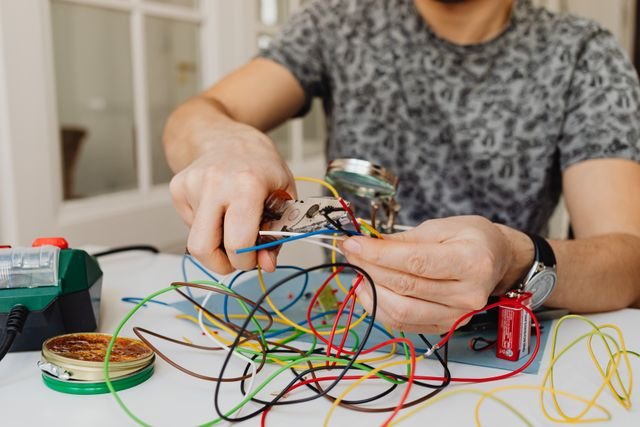

The heating element that stops working on a Thursday afternoon is easy enough to diagnose. The induction zone that heats intermittently, the ceramic cooktop that runs hot at every setting, the touch control panel that cycles on and off without any input; those faults are considerably harder to read without proper diagnosis. Getting that diagnosis right is what determines whether a repair resolves the problem or buys three more months before the next component fails.
Electric cooktops fail differently from gas models, and that difference matters for the decision that follows. Gas stoves fail around valves, ignition, and combustion. Electric cooktops fail across heating elements, thermostats, electronic control boards, and wiring connections. Modern ceramic and induction models add sensor-based control layers that make the fault picture more complex than older coil-element designs. The presenting symptom is often one step removed from the actual failure point, which is why accurate electric stove repairs require proper diagnosis first.
Reading the Four Common Electric Stove Faults
A failed heating element is the most frequent fault on coil-top and ceramic models. The zone stops generating heat or heats only to partial intensity. On a coil-top, this is straightforward to assess; on ceramic or induction, the same symptom can point to a failed element, a thermostat sensor, or a control board issue, depending on how the fault presents across settings.
Thermostat or sensor failure produces a different pattern: the zone generates heat but cannot regulate temperature reliably. Food scorches at low settings or the surface fails to reach cooking temperature at high ones. Replacing the thermostat resolves the fault if that component is the failure point; a misdiagnosis that leads to an element replacement solves nothing.
Control board and digital display failures show as unresponsive touch controls, zone indicators that malfunction, or an appliance cycling on and off without input. These repairs typically cost more than element replacements and sit closer to the replacement threshold on most appliances.
Wiring or internal connection faults are the most serious category. Visible scorching, a burning smell, or a residual current device tripping repeatedly are the presenting symptoms. These require assessment of whether a licensed electrician needs to be involved alongside the appliance technician, because complex wiring work on electric cooktops sits within licensed electrical work under Australian regulations.
What Australian Consumer Law Covers for Electric Stove Faults?
In Australia, according to the view of the Australian Competition and Consumer Commission, the goods must meet certain consumer guarantees in terms of safety, durability, and appropriateness. The stove failing during a reasonable period of expected life is subject to the right to repairs, replacements, or returns independent of any wording in a warranty form. The period of the reasonable expected life of a product depends on such factors as the nature of the product, its price, usage, and the expectations of a reasonable consumer in these conditions.
The Australian Competition and Consumer Commission differentiates between minor and major faults. In the case of a minor fault, the business is free to repair the product, but in the case of a major fault that is understood as an unsafe product, substantially unfit for its intended use, or a product that requires a significant amount of time for repair, the consumer has the choice of the remedy. Businesses have a duty to give a repair notice prior to repairing the product which involves the use of refurbished parts.
Starting from 1 July 2021, the consumer threshold in terms of the Australian Consumer Law has been increased to $100,000, meaning that almost any domestic appliance purchase is covered by it regardless of the price.
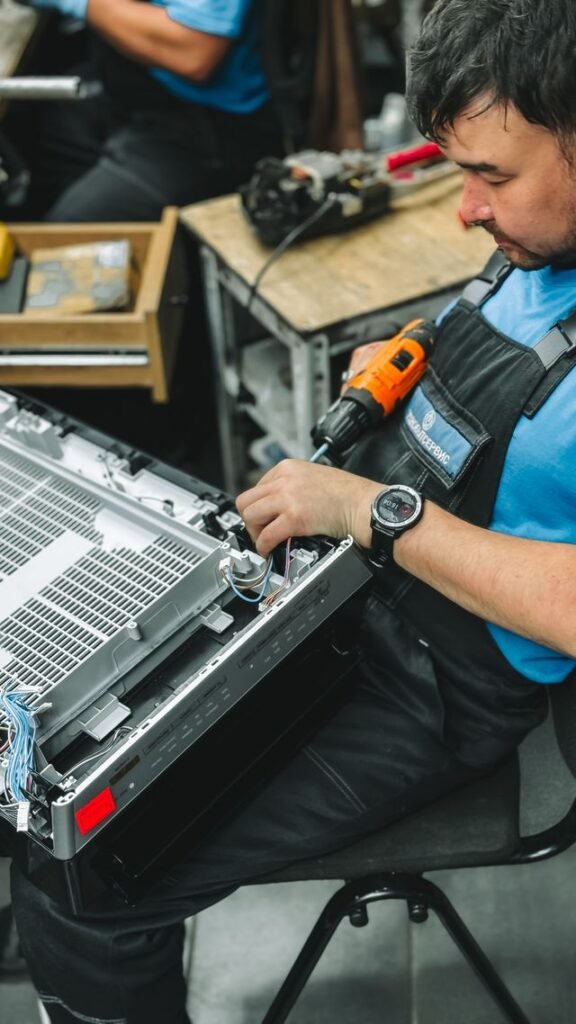
Knowing When Repair Makes Sense and When It Does Not
There is no established guideline in Australia regarding the point of switching from repairable to replaceable items. However, the ACCC uses a fact-based test, taking into account the product category, cost, expected lifespan of the product and nature of the problem. Nonetheless, there are a few considerations that come up during making repair decisions in practice.
A problem in a new machine that is still far from reaching its estimated lifespan is definitely a reason for repair. In case the appliance shows a number of consecutive failures as it ages, with repairs following each other in close succession, the repair vs. replace dilemma becomes relevant. Any safety concerns, such as the existence of a fault with wiring, failure of the thermal cut-out, and even arcing inside the machine, must be checked first and foremost. Leaving an appliance operational without fixing the wiring problem while waiting for a less expensive repair is not rational.
It is better to choose a technician who can diagnose the problem right on the spot, run a check on all zones at working temperature after repairs and give recommendations about possible problems in the future.